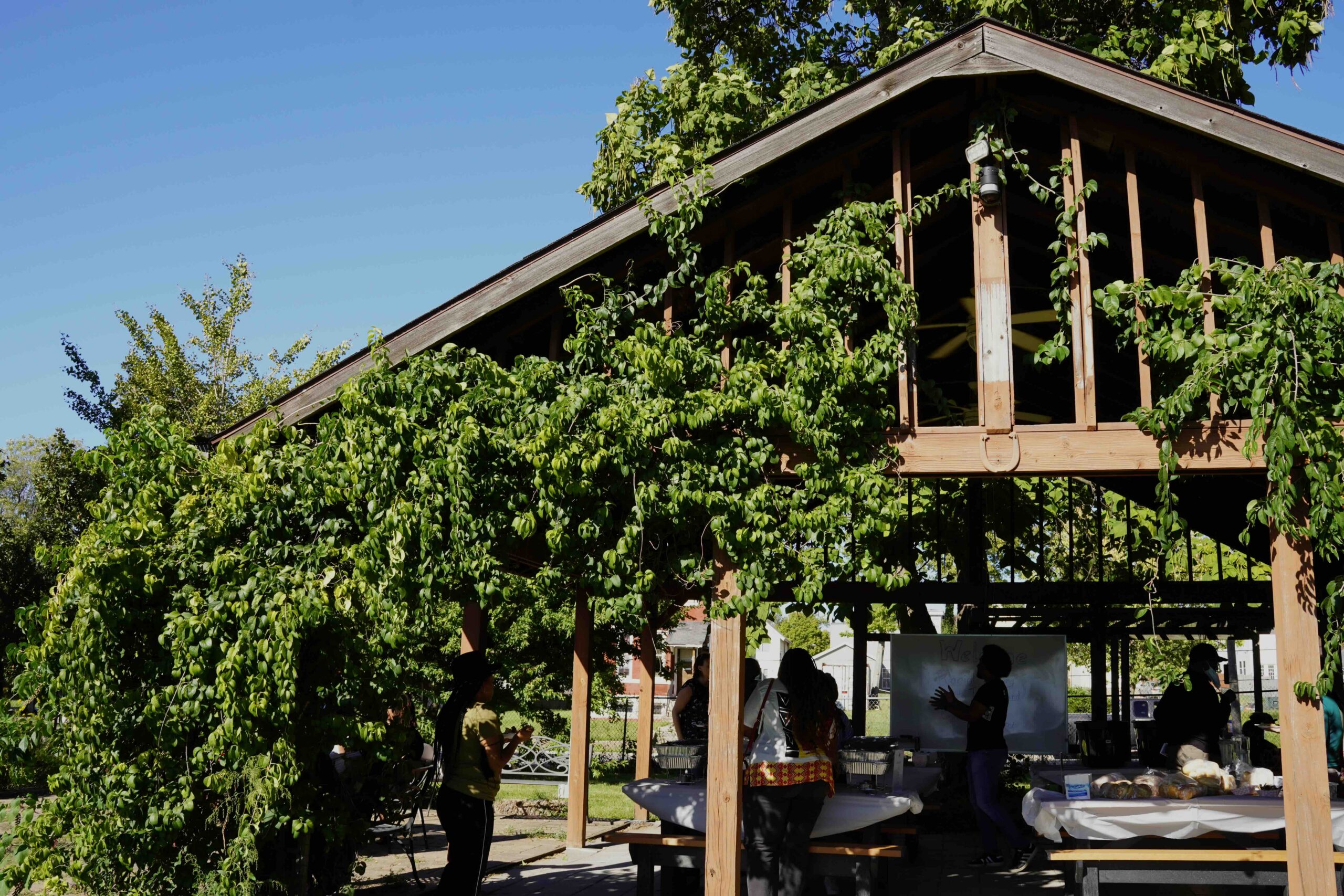

History + Community Design
The Racial Healing + Justice Fund funding priorities were chosen based on the intersection of the community engagement and design activities during the summer of 2020 and the central purpose of the fund to invest in and build the capacity for healing from racial trauma. They were identified by residents, community organizers, and healing practitioners and solidified by the Community Governance Board.
These funding priorities are a call to action for bold ideas and initiatives of Black and brown St. Louisans (St. Louis region and surrounding counties) directly impacted by racialized oppression who want to take on the commitment to change the systemic conditions that reinforce systemic racial inequities and endanger lives and to heal the core of our community.
Heal the Core
- Solicit, curate, and amplify truth narratives on experiences with racial oppression;
- Support artistic/creative expression and engage artists in creating a shared vision for a healed future;
- Expand opportunities for community members to express grief, connect to sacred cultural assets, and seek/offer forgiveness through healing circles and other restorative practices;
- Provide platforms for people to build and exercise their individual power and resilience;
- Invest directly in grassroots organizations that promote intragroup and intergroup healing and foster community resilience;
- Connect individuals to healing justice as a mode of resilience and recovery from trauma
- Invest in community-wide, neighborhood level, and small group platforms that offer residents opportunities for deepening relationships through restoration, reverence, respect, and trust-building; or
- Support the spiritual and emotional health of organizers and social justice advocates by connecting them to one another and offering opportunities for their own healing and self-care.
Change the Conditions
- Invest in local leaders of color and forge a pipeline of future leadership from impacted communities;
- Build organizing capacity and invest in the professional development of organizers and activists;
- Center grassroots knowledge and advocacy to transform systems and structures;
- Build the capacity of individuals to step into their power and actively facilitate organized engagement;
- Prepare and invite more community residents to participate directly in leading and facilitating community mobilization, organizing, civic engagement, and system change;
- Broaden resident engagement to operationalize policymaker accountability structures and practices;
- Foster connections between new/young change agents and seasoned/experienced change agents;
- Connect the priorities and strategies of high capacity organizations with grassroots entities and activists; or
- Align philanthropic funding and other local investments in strategically centered priorities that reflect a shared vision of racial equity and healing-centered justice
Community Identified Priorities:
Youth at the Center
Opportunities for children and young people to process trauma, build power, and grow to be engaged members of the community.
The Sustainability of the Community
Capacity building within communities that drive holistic growth while dismantling systems of racial oppression, and which connect the people and the causes that promote continued growth, development, and wellbeing.
Storytelling and Sharing the Work
Cataloguing, widely distributing, and awareness building on racial healing a justice work to facilitate the engagement, leadership, and activation of residents most impacted by systemic racism. As well as teaching community members how to share their personal stories to activate others for systemic change.
Education and Training
Knowledge-sharing and -building opportunities for community members most impacted by systemic racism to access information on racial healing, power-building, and community advocacy as well as liberation practices and supports.
Supporting Healers and Organizers
Infrastructure and initiatives that support Structural, emotional wellbeing, and capacity-building support for racial healing practitioners and community organizers.
Direct Impact
Expansion of impactful existing racial healing services as well or the development of innovative new healing justice programs or services.
What Type of Activities will be Funded?
Within the above funding priorities, the design process surfaced examples of activities.
| Storytelling & Creative Art | Activating the creative arts to dismantle systemic racism, build awareness, promote racial healing, and move people to action. |
| Growth & Sustainability of Community Healers and Organizers | Fostering collaboration and partnership
Professional development, continuing education, and skill-building Developing leadership pipelines |
| Models for Collective Healing | Supporting mental and emotional health services for people of color, as well as services specifically targeted to the Black community
Creating and piloting models for holistic community health and wellbeing Centering intentional healing initiatives |
| Intersectional Healing and Organizing Initiatives for People of Color | Healing and organizing focused on: Maternal Health, Elderly Services and Care, Parents and Parent Advocacy, Children and Young People |
| Community Building | Focusing on community healing and the creation of models for collective healing
Creating intentional community-based spaces for healing justice Supporting education initiatives for the community Supporting education & professional development (capacity building) of grantees Growing and implementing models for effective community decision-making or participatory budget. Supporting crisis program infrastructure and housing supports |
| Democracy and Building Political Power | Implementing leadership development initiatives for residents to participate in civic institutions (government, elected office, schools, etc.)
Activating residents of color to exercise their political power towards systemic change. |
| Addressing Racialized Trauma | Addressing systemic oppression within racial healing or organizing spaces and sectors.
Creating and upholding methods, models, and frameworks for accountability to communities of color. Continuing support of activists and advocates for justice. Developing and delivering antiracism and racial justice training, workshops, and interventions that heal internalized racial oppression. |