
Change Rules for Municipalities Holding Defendants for Other Municipalities
A municipality shall not hold a defendant for another municipality for longer than 4 hours for a non-violent offense.
Expanding Civilian Oversight
The expert testimony, research, scholarship, and lived experience collected by the Commission revealed the following: In the wake of the shooting death of Michael Brown, public perception of police legitimacy and effectiveness and trust in procedural justice have decreased as compared to before the shooting. Public estimates of frequency of misconduct have gone up (Kochel,…
Encouraging Appropriate Use of Technology in Citizen-Law Enforcement Interactions
The expert testimony, research, scholarship, and lived experience collected by the Commission revealed the following: The U.S. Department of Justice (DOJ) researched the police response to demonstrations that occurred after Michael Brown was killed in August 2014 and found that the use of military-grade weapons and vehicles was “inappropriate, inflamed tensions, and created fear among…
Conducting Just Use of Force Investigations
The expert testimony, research, scholarship, and lived experience collected by the Commission revealed the following: In the United States, immigrant communities and ethnic minorities often become disproportionate targets of the traditional crime control model that uses physical force (Simmons, 2010). New York City’s Civilian Complaint Review Board (CCRB) found that while Blacks comprised 23 percent…
Authorizing Appropriate Use of Force
The expert testimony, research, scholarship, and lived experience collected by the Commission revealed the following: Following investigation of the Ferguson Police Department, the U.S. Department of Justice (DOJ) issued a report on March 4, 2015, which noted that Ferguson’s police sometimes violate citizens’ Fourth Amendment rights through the use of excessive force (DOJ, 2015). The…
Improving Officer Training
The expert testimony, research, scholarship, and lived experience collected by the Commission revealed the following: In St. Louis City and the County, 75 percent of the police departments are unaccredited (Better Together, 2015). The State of Missouri does not require police departments to be accredited, perhaps explaining why in St. Louis City and County only…
Re-Envisioning Response to Demonstration
The expert testimony, research, scholarship, and lived experience collected by the Commission revealed the following: On September 3, 2015, the United States Department of Justice (DOJ) released a thorough “After-Action Assessment of the Police Response,” detailing the 17 days following the shooting of Michael Brown (DOJ, 2015). In this investigation, four police departments (Ferguson, St….
Strengthening Anti-Bias and Cultural Competency
The expert testimony, research, scholarship, and lived experience collected by the Commission revealed the following: In 2014, a Gallup poll found that 60 percent of White Americans expressed more trust in police than nonwhites did (49 percent) (McCarthy, 2014). In 2014, Black drivers in Missouri were 75 percent more likely than White drivers to be…
Utilizing Community-Based Alternatives to Traditional Sentencing
The expert testimony, research, scholarship, and lived experience collected by the Commission revealed the following: Over the past few decades, there has been a rise in the number of “problem-solving” courts in the nation, which include community courts, drug courts, and domestic violence courts (Porter, 2010). One study defines “problem-solving courts” as courts that “seek…
Redefining Courts’ Response to Nonviolent Offenses
The expert testimony, research, scholarship, and lived experience collected by the Commission revealed the following: In 2013, the municipal court in Ferguson, a city of 21,135 people, issued 32,975 arrest warrants for nonviolent offenses, mostly driving violations (Shapiro, 2014). Similarly, Pine Lawn, another municipality in St. Louis County, has a population of only 3,275 and,…
Facilitating Efficiency Through Consolidation of Police Departments
The expert testimony, research, scholarship, and lived experience collected by the Commission revealed the following: The St. Louis region is currently served by 60 police departments of varying sizes and service levels. The region’s 60 police departments range from large, full-service agencies to small municipal departments. The St. Louis Metropolitan Police Department and the St….
Encouraging Efficiency and Transparency
The expert testimony, research, scholarship, and lived experience collected by the Commission revealed the following: Court barriers to transparency include: records that are closed, that never existed, or that disappeared; inefficient and costly processes for gaining access to public records, sometimes requiring days or weeks; private electronic databases to which interested citizens lack access; and…
Protecting Rights and Effectively Administering Courts
The expert testimony, research, scholarship, and lived experience collected by the Commission revealed the following: According to a report on the municipal courts in the St. Louis region and community members’ experience within them, “family members were forced to wait outside courtrooms while loved-ones represent[ed] themselves in front of a judge and a prosecutor. Many…
Notify Parents of Detained Minors
A parent, guardian, or caretaker of a minor placed in detention must be notified within 4 hours of their child being placed in detention.
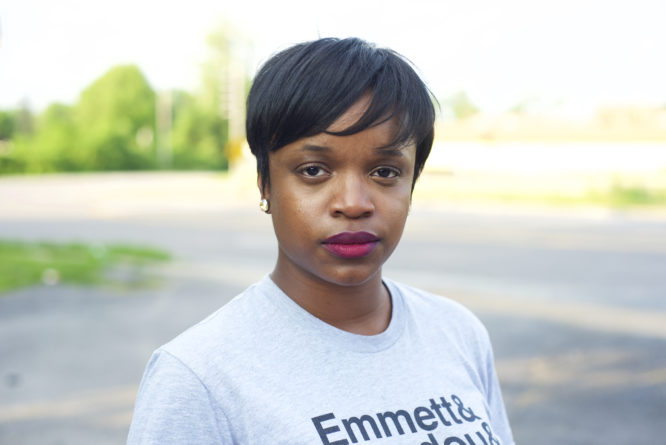
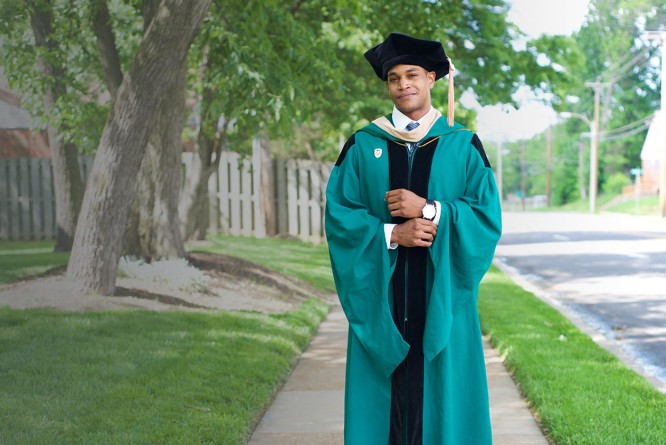
Preston and Sharon
Our youth present our greatest opportunity to impact positive and lasting change. Addressing our endeavors to the whole child through education, health, encouragement, support, and opportunities will fundamentally change their lives now and their futures forever.
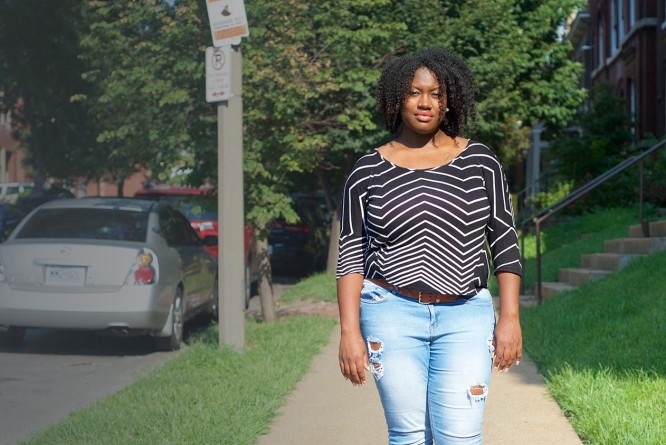
Dawn
Achieving justice for all requires a commitment to begin an honest review of how consolidation of police departments and municipal courts could commence. Building relationships based upon mutual respect and trust, being transparent about challenging and destructive behaviors and embracing fair and reasonable laws and policies will lay the foundation for unbiased, responsive government.